Tuesday, January 30, 2007

Chocolate!

The Celestial Food aka Cocoa


The scientific or Latin name of the plant is Theobroma cacao, the genus name means 'Food of gods' which I simply termed as 'Celestial Food'. Peculiar, but it seems that the ancient Mexican that encountered this plant, treats it as a heavenly food as well. Royalties often savour their chocolate drinks unsweetened in the same ways as us nowadays. In addition to this, they have their chocolate drinks occasionally flavoured with Vanilla pods and sweetened with honey. Anyway, we do enjoy our hot chocolate from time to time and not to mentioned, our after dinner nibbles usually consist of chocolates 'spiked' with mint.


We are all too familiar with the calming and pleasurable effect the Chocolates bring to us when we indulge in them. The feeling of being in love, some says, manifest itself at the very same time your every taste buds being excited by the flavourful yet beneficial 'Celestial Food'. However, chocolate is quite fattening, partly due to the amount of sugar they contain and also the fat they possess naturally. Anyhow, one research suggest that Milk Chocolate doesn't elevate body fat level drastically and the research also forward the idea that this is the unique effect of Stearic Acid (a kind of saturated fatty acid) it contains (in lay man term, this means it might not be fattening).


Before I forget, Cocoa beans are called also called Cacao, a much less familiar name.


Its usage as a herb comes to a surprise to many, in fact one of my special friend proclaim that such good tasting snack had hardly any benefits on health. Well, herbs are suppose to heal and most of them are derivatives from either the plant kingdom or the fungi kingdom (however, some even suggest the usage of bacterial (from the kingdom prokaryotae as herbal, I loosely disagree on this but my stance is quite shaky actually).


Cocoa bean and chocolate (the yummy snack) can be of help to the digestive system, facilitates blood circulation, and ease chest congestion. It is a vascodilator in a sense and also helps in bronchial spasms. This means it is quite useful as a symptomatic relief caused by asthma and allergic reactions.


The 'Celestial Food' contains caffeine, theobromine, trytophan (one of the precursor for serotonin), and amandamides (humorously, this is the substance that activate the same receptor in the brain that marijuana does).


You might ask, how to take advantage of this nice and nutritious herb? I didn't like to endorse commercial chocolate as they are too fattening (However, they make great Valentine's Day gift, well, they are suppose to make people happy. However, love for this herbalist wannabe is just a trivial matter). So what I endorse? See the following;


Hot Chocolate


Ingredients


  • Two and a half teaspoon of Van Houten Pure Soluble Cocoa Powder

  • A dash of ground Cinnamon (optional)

  • A dash of ground Nutmeg (optional)

  • Honey to taste (optional)

  • Stevia to taste

  • A cup of hot boiling Soy Milk (can be substituted with a cup of boiling hot water mixed with two tablespoon of Soy Bean Milk Powder)


  1. Put the Cocoa powder into a cup, put in the Cinnamon and Nutmeg. Mix well with a spoon.

  2. Then pour in the Soy Milk slowly while mixing.

  3. Lastly, put in the Honey and Stevia.


This drink is a healthy alternative to conventional hot chocolate which is laden with fat. Opt for organically grown Soy Beans. Cocoa is definitely useful for a little mood elevation.


**Image Retrieved From http://www.tradinorganic.com/images/photos/cocoa.jpg

Thursday, January 25, 2007

Bergamot


Citrus bergamia


An evergreen citrus fruit tree that is a member of the Rutaceae which includes all the citruses. Also known as sweet orange, this fruit is shaped like a pear and only grow in warm climate.


The common usage of this herb is usually in its essential oil form. The oil has quite a distinctive, pleasant smell, often pungent and sharp. It's different from orange essential oil in many expect but distinctively citrus. The oil is extracted from the rind mainly by hand but it is now done extensively by machines.


The essential oil is reputed to be very antiseptic and it has been used for many centuries, particularly in Italy. There, the oil is used to treat fever and worms. It is also used as a nice additives to food products, such as the world renowned Earl Grey Tea (oh I love that tea). It is also used to perfume certain toiletries such as Eau de Cologne.


When used in appropriate dilution, it is useful in treating a myriad of skin diseases including eczema which does not respond well to other treatment. The oil can be use to clear stress-induced symptoms such as headaches and irritability by introducing it into massage oil. I personally like to include this in my vaporiser.


Moreover, Bergamot helps in gastrointestinal spasm and flatulence, and when used in massage oil, it can cure constipation and colic. The oil is also detoxifying and helpful in the treatment of cellulite.


When used in bath, it can soothe vaginal itching and helps in cystitis. While used in steam inhalation, it cannot help but cures respiratory infections such as sore throat and bronchitis. Also, it can be used on the hair to fight dandruff and used in mouthwash to deodorise. (for more about deodorising your mouth, refer to my previous post of Bad Mouthed Symptoms.


There is also another usage for Bergamot, that is the usage of the leafs (esp. the young shoot) as tea leafs. It is very fragrant and it is used favourably in the United States before tea achieved its fame. They called it Oswego Tea.

Sunday, January 21, 2007

Skin Toner: The Importance

Every now and then we need a nice refreshing toner for our beloved face. This is an all natural toner that can be of help after you washed your face. Provided is a recipe that will suit a variety of skin type.

As I have learnt that plain Rose Distillate Water can be a great toner to the skin, this recipe provides a basic toner for everyone's skin.

Our Apothecarist's Very Own Toner
Elderflower Skin Toner
  • 10 dried Elderflower heads
  • 300ml of bottled spring water boiled in a Pyrex pot or stainless steel ware.
  • 15ml of the following;
    • Normal Skin: Apple Cider Vinegar
    • Oily Skin: Witch Hazel
    • Very Oily Skin: Vodka
  1. Strip the Elderflower from the stem and place in a clean bowl. Pour the boiling water over the flowers and infuse for 20 minutes.
  2. After which, add in the Vinegar, Witch Hazel or Vodka. Cover and leave overnight.
  3. Strain into a sterilized jar and store in the fridge.
However, for really oily skin, I prefer the usage of 25 g of Fresh Mint with 15 g of Marigold Petals substituting the Elderflower heads. Also, double the content of water and use Vodka.

As it will not keep for more than two weeks, remember to date the bottles well.

If you do not have much time for such concoction, perhaps you can consider our very own toner: Mayura Apothecary Hydrosol Toner 150mL.

Thursday, January 18, 2007

Garlic

Garlic


Also known as 'Poor man's Treacle', this herb is fantastic! It's almost a panacea for a variety of disease that is viral, bacterial, or fungal in origin. It acts on respiratory infections such as chronic bronchitis, respiratory catarrh, and recurrent colds and flu. It is said to prevent H.pylori as well as it is extremely antiseptic. Also, it's useful for digestive infections.


Garlic is diaphoretic, diuretic, expectorant, and stimulant. Garlic is also beneficial in treating hypertension and high triglyceride level. It prevents arteriosclerosis, and acts as a tonic on the cardiovascular system. Moreover, it strengthen the immune system and has anti-cancer effects. Aged garlic extract seems to be more effective in this manner.


However, those who has sensitive stomach or gastrointestinal inflammation might not want to take this herb as it is can be overly stimulating.


One might ask, what is the best way to utilise Garlic in our everyday life? The answer is simple: use them in what they do best, flavouring your food! You might want to try them in your favourite dishes, such as in marinade (it works well with Rosemary and the mixture goes on well with Thyme and Oregano too, both herbs being an effective antibacterial herbs too) and frying vegetable. Use Garlic when you are frying with oil as Garlic contains various antioxidants to prevent oxidation of the oil.


Garlic can be used as an anthelminthic, usually used to treat diarrhoea caused by worms and dysentery. It can be used in conjunction with Tree Tea Oil (in a poultice form) to treat fungal infection on the skin. However, do remember to prepare a suitable preparation as too strong a preparation can burn the skin.


If you are struck down with flu, try this recipe. It cures me instantly when I am on the brink of infection. However, take it after a light meal but never on an empty stomach. Yikes it hurts!


Garlic Syrup


Ingredients

  • 1 head Garlic

  • 300ml of water

  • Juice of 1 lemon

  • 2 tablespoon Honey


  1. Peel the Garlics crush them before putting in the water and bring to the boil. Simmer gently for 20 minutes.

  2. Allow to cool to lukewarm, add the honey and lemon juice. Strain and drink.


My advice is, prepare the juice later when the concoction is simmering. This will prevent the Vitamin C content to oxidise rapidly. It might smell bad too, so down it all without taking even a sniff (this works well when you are having a running nose).


However, I also recommend Garlic capsule i.e. the capsule of Garlic essential oil as supplement.

**Image taken from http://www.foodmuseum.com/images/garlic1.jpg

Monday, January 15, 2007

Natural Sweetener

If you are someone who is constantly searching for a replacement for table sugar, I might be of help to put an end to your search. For me, aspartame is usually out as I don't buy artificial product (even my car perfume comprise nutmeg and cinnamon). Moreover, Aspartame is dangerous for people suffering from phenylketonurics; sufferers of this disease cannot digest phenylalanine (a kind of amino acid) because of lacking certain enzyme. Some even rumoured that Aspartame can damage our nerves, though baseless, but I am always sceptical about synthetic products, especially foodstuff.

So what is the natural sweetener you might ask, the answer is easy: Stevia. Some might not even heard of it before, and some might frown, thinking that it is just another over the counter sweetener. Stevia is alright if used in right dosage as any other herbs and according to research (Curi et al., 1986), “water extract of Stevia Leaf caused a decrease in blood sugars and an increase in glucose tolerance,” However, the research was done on healthy individuals (human of course).

Stevia is a plant that comes from the rain forest in Paraguay and Brazil. The purified white extract of the leaves is up to several times as as sugar its weight. However, there is lingering chemical after-taste which is not so detectable and almost negligible if added in coffee or when cooking. Stevia is not toxic in sweetening dosage, which is to taste. Dieting or diabetic patients can often benefit from this sweetener.

For a refreshing fruit flavoured drink, I recommend the following:

Mock Fruit Punch

Ingredients

  • St. Dalflour Teabag (Lemon tea, Earl Grey, Black Cherry, etc.)
  • Stevia to taste
  • a cup of boiling hot water.

  1. Steep the tea bag in the hot water (preferably spring water boiled in a glass pot or stainless steel kettle) in a cup.
  2. According to the direction given, one shouldn't steep the tea too long, this is known as 'stewing' and it will result in a bitter after-taste.
  3. Put Stevia extract to taste. The resulted drink is a refreshing fruit flavoured drink. To make a cool drink, simply pop in a few ice cubes.

You might be wondering the reason I introduced St. Dalflour Tea. The reason is simple; their product is organic and naturally flavoured. I am the biggest fan of their Earl Grey but do remember you are dealing with caffeine drinks here.

How about Stevia? What's the brand I should buy? Well, for Malaysian, I have not much to endorse as we only have one popular Stevia product which sells by the brand GreenliteTM produced by Stevian Biotechnology Corp. Sdn. Bhd. However, I have seen pure dried leaves sachets of the plant sold in a nearby pharmacy. Also, a word of advice from me, if you want to buy GreenliteTM, try their pure leaves extract instead of their pills and sachets. The packing is white while others are green coloured.

Also, try this:

Hot Chocolate

Ingredients

  • Two and a half teaspoon of Van Houten Pure Soluble Cocoa Powder
  • A dash of ground Cinnamon (optional)
  • A dash of ground Nutmeg (optional)
  • Honey to taste (optional)
  • Stevia to taste
  • A cup of hot boiling Soy Milk (can be substituted with a cup of boiling hot water mixed with two tablespoon of Soy Bean Milk Powder)

  1. Put the Cocoa powder into a cup, put in the Cinnamon and Nutmeg. Mix well with a spoon.
  2. Then pour in the Soy Milk slowly while mixing.
  3. Lastly, put in the Honey and Stevia.

This drink is a healthy alternative to conventional hot chocolate which is laden with fat. Opt for organically grown Soy Beans. Cocoa is definitely useful for a little mood elevation.

Saturday, January 13, 2007

Tea Tree Oil

Tea tree is a shrub or small tree growing in Australia. It is a member of the family Myrtaceae. Its leaves are slender and looks like a needle. Nevertheless, it is not from the pine family as they flower. If you ever wonder why it is called Tea Tree even though it is not a Tea plant, this is the explanation; the aborigines used the leaves as 'tea' leaves and made infusion from them. Also, the leaves are also crushed and applied as poultice to wounds and sores. As this oil can be applied neat, no dilution is necessary but it is quite drying to the skin. According to Alan Tillotson in his book 'The One Earth Herbal Sourcebook” , it is wise to apply together with Olive Oil if the one utilising the oil is suffering from dry skin. As the old adage goes 'Moist when dry and dry when moist'” at least this is what he says.


The oil is extracted by steam distillation of the leaves. Its smell is strong, spicy and camphor-like. It is now used widely in producing hygiene products including germicides, gargles, toothpastes, etc.


The properties of Tea Tree Oil are antiseptic, antiviral, and antifungal. In addition to this, it also stimulates the body's immune response against infection by activating white blood cells, which also partially responsible for its antiseptic property.


This means that it is also effective (highly) against influenza and other respiratory tract infection. For this purpose, steam inhalation is effective. For throat infection, use as a gargle by adding a few drops of oil in a cup of hot water and gargle. This is also good for ulcers and gingivitis. It is also effective for halitosis (for more of this, refer to the post Bad Mouthed Symptoms).


Try treating a variety of skin disease with this oil. Try facial steam with this oil if you are suffering from acne, pimples, spots and blemishes. Apply this to fungal infections such as ringworms, and athlete's foot. Also try it on wounds, and ulcers. I personally see the benefits of this oil in the treatment of diabetic patient as their wound are prone to slow healing. It is also effective against insect bites and minor burns.


Well, I also see that it is useful in its treatment against toe-nail fungus or any other type of nail fungus. Tape a cotton dabbed with Tea Tree oil and leave it overnight. Repeat twice a day and prolong treatment for one or two months or until heal. Also, try soaking your nail in Apple Cider Vinegar for 20 minutes before applying, this will help to soften your nail and help the oil to penetrate.


A word of precaution however, Tea Tree oil MUST not be ingested as it is very poisonous.

*The above image is retrieved from http://aroma.client.jp/img/herb/tea%20tree.jpg

Thursday, January 11, 2007

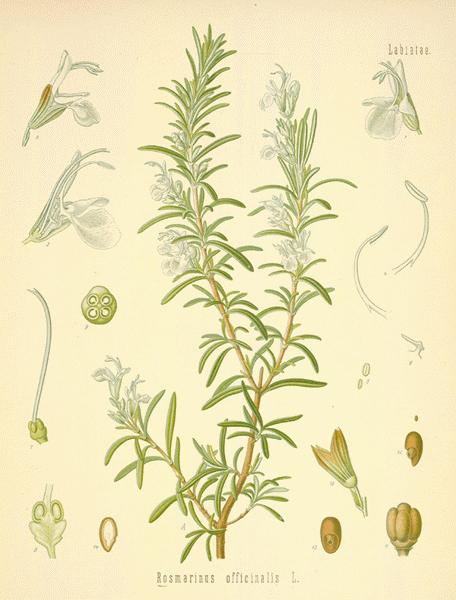
Rosemary

After my ranting sweet about oriental medicine, it's about time I blog about western herbs. This time, I am going to introduce a nice herb called Rosemary which you might read about it before in your recipe books. A nice and hardy plant (it can even grow in Malaysia), it is used in cookery as early as the Roman period. They also use it as Herb for remembrance and even though I sound superstitious, I use it for the same purpose.


My favourite usage of his herb is to flavour poultry. It is nicely scented and goes on well with Garlic and Thyme. Taking herbs as condiments is, in fact, a way of consuming herbs and it is a delicious way to do so too. So, my advice is that, use herbs generously in your cooking.


Rosemary is tonic, astringent, diaphoretic, and stimulant. Perhaps the panacea for a hundreds type of headaches, tradition tells us that Rosemary will not fail in treating all kind of headaches. The essential oil is Stomachic, Nervine, and Carminative. All those big words mean it is good for you when you have abdomen related complaints such as stomaches and the like. Carminative, especially, means that it is good when you have flatulence. However, do note that only the essential oil has such properties.


The infusion is good to improve hair condition too. Often, I found article that Rosemary can prevent dandruff, baldness, graying of hair, and a variety of hair problems. However, the oil works best in this respect.


Rosemary tea can alleviate headache, colic, colds, and nervous diseases and may also lift depression. In this respect, addition of a few Chamomile flower-head will help much in achieving its desired effect. Sweeten with a honey if desired as it will not taste good. Refer to my previous post on how to make a good cup of infusion.


Also, refer to my previous on how to make a herbal cream. It will comes in handy for making Rosemary cream as it is reputed to smooth out wrinkles.


As for its tonic effect, I have already posted an article about making Rosemary wine in December. If you dislike such drink try this instead, it is alcoholic too by the way.


Rosemary Tonic Tincture


Ingredients


  • 6 sprigs of Rosemary

  • a bottle of sweet white wine


  1. Put the Rosemary into the bottle of sweet white wine and steep for two weeks.

  2. After which, take a wineglass as a daily tonic.


There you have it, the usefulness of a culinary herbs. There's more coming in, make sure you check in often!

*The picture is taken from: http://www.botanical.com/botanical/mgmh/r/rosema17-l.jpg

Wednesday, January 10, 2007

Ginseng Tea

This is a simple and nice recipe for consuming Ginseng (for those that do not want to cook). It can be served after meal as a digestive. Often, I advise against serving this tea after a hot dinner, that is, a dinner filled with fried or roasted food; especially deep fried food.


인삼차 [Insam Cha]


MAKES 900ML


Ingredients


  • 3 Slices of Ginseng (Red recommended)

  • 1cm piece of Fresh Old Ginger

  • 3 Chinese Jujubes (Hong Zhao), cut into pieces. Use seeded.


  1. Put all the ingredients into a saucepan (I prefer Pyrex glassware as Chinese Tradition recounts that Ginseng shouldn't touch any metal besides silver. However, stainless steel is fine) and add in 900ml of water (preferably spring water or bottled mineral water of reputable brand).

  2. Bring to the boil, after which, lower the heat, cover and simmer for 1½ hour.

  3. Strain into cups. Add pieces of Ginseng if you like and sprinkle some Pine seeds for decoration.


There you have it, a nice cup of Insam Cha. This recipe extracts all the goodness of Ginseng together with Ginger and Jujubes. It is a good tonic and it made a good warming drink during winter time. For those who are living in hot climates, this drink shouldn't be a staple as it will induce insomnia, sore throat, and the like (you get what I mean).


Do not consume Ginseng if you have such condition:


  1. Fever

  2. Hypoglycemia or hypertension

  3. Under Cardiac medications.


Also, do not consume Ginseng late at night as it will cause insomnia and may also cause nervousness and sleeplessness. May cause irritability in some sensitive individuals. “Ginseng therapy elevated mood, improved psychophysical performance, and reduced fasting blood glucose and body weight. The 200-mg dose of Ginseng improved glycated haemoglobin and physical activity,” (Sotaniemi et al., 1995).

Monday, January 08, 2007

Selecting Ginseng

Selecting Ginseng

The three main type of Ginseng is as follow:

  1. Oriental Ginseng (Panax ginseng)
  2. American Ginseng (Panax quinquefolium)
  3. Siberian Ginseng (Eleutherococcus senticosus)


Oriental Ginseng
This is the much popular root of all the time, often reaching celebrity status, the famous Ginseng. It’s an ideal stimulating tonic as it is more effective than any other species in this respect. However, someone who is ‘hot’, hyperactive, and nervous shouldn’t take this herb. However, this is exceptional when one is exhausted, recuperating from illnesses, or aged. Ginseng tends to be masculine in energy, which may amplify male hormonal qualities more successfully than other varieties. Subsequently, this root is better for males than females but the variation is so slight, both sexes can consume them without much difficulty. However, do take precautions.

American Ginseng
Currently available in the United States and the Far East, it is almost as popular as Oriental Ginseng. American Ginseng, though tonic, is a ‘yin’ tonic. It’s not as brim stoning as Oriental Ginseng, thus allowing a variety of person to consume it without much problem. It is adaptogenic nonetheless and in this respect, comparable to that of Oriental Ginseng. People in warmer climate (like in Southeast Asia) prefer this to Oriental Ginseng.

Siberian Ginseng
I have already blogged about this herb in details. Refer to the post with similar title.


The Grades and Varieties of Oriental Ginseng

The best one is called ‘Yi Sun’ Ginseng. Though I never heard of it, I am including a list of guideline on what to see when buying your root.

Age
The older the root when harvested, the better. Larger roots might be older than smaller roots but to see it clearer, note the head-like protrusion on the top of the Ginseng root. If you see attentively, you will notice the rings on the node. The number of the rings roughly parallel the years the said Ginseng is cultivated.

Colour
Red is better than white generally, because higher quality roots are usually selected for steaming. The Korean called this ‘Hong Sam’

Hardness
The root should be firm and hard. If it is red, it should look crystalline and deep in colour, often red.

Taste
Ginseng root should taste rich, strong and bitter, often with a peculiar sweet aftertaste.

Shape
The shape should be straight with some hairy tendril roots. Roots that are too hairy are not of good quality as root hairs are medicinally poor. The root should have a man-like appearance and generally, curled roots are of a more inferior quality.

It is worthy to mention that the Koreans' roots are of good quality too. Though not as good ad the Chinese’s as it is quit blatant in term of energy, nonetheless, you can guarantee Korean roots to be of good qualities. The Korean Government is very specific in their Ginseng Roots and theirs are quite world-renowed.

*Image taken from: http://www.medizin.de/gesundheit/data_images/low/991-ginseng.jpg

Friday, January 05, 2007

Ginseng Chicken Soup

My blog recently has almost been a cook book website. I am surprised as well but I am pleased to say that I am a culinary master too (just kidding, the most I can cook is Korean). Anyhow, I don't introduce recipe without any purposes. The purpose I am posting this recipe is because of its healing properties. It combines the goodness of 인삼 (ginseng), chicken, and Sweet Glutinous Rice. This dish generally tones up the 'yang' energy of a person, that is, a tonic. It restores to the body the ability to recuperate with stress and to impart a sense of wellbeing.


Prolong usage of Ginseng, the Chinese said, will help one to slow the process of aging. Though miraculous, one must be careful of imitation. In the next post, I will post the way of selecting Ginseng root and how are they classified. This is definitely one of the way for consuming Ginseng and it is a very delicious way too.


Ingredients


  • 2 Cornish Hens (or small size hen)*

  • ½ cup of sweet glutinous rice

  • 4 whole garlic cloves

  • 4 Chinese date (red jujube) [Hong Zhao]

  • 4 chestnuts [Ma ti]

  • 2 fresh ginseng roots**

  • 2 green onions

  • small piece of ginger

  • 8 cups of water

  • salt, to taste (the less the better)

  • ground black pepper, to taste


*If you are a Malaysian, opt for “Kampung Chicken” or “Malay Chicken”, supermarket or “Pasar Chicken” just won't do.


**If Ginseng roots are dried, soak in water for more than an hour until soft.


Directions


  1. Clean the Sweet Glutinous Rice and soak in water for an hour.

  2. Peel the chestnuts.

  3. Take out guts from hens and wash well. Skim the fat as well.

  4. Remove the seeds from the jujubes.

  5. Stuff the chicken with the soaked rice, garlic cloves, jujubes, chestnuts and ginsengs.

  6. Make a vertical cut on inner part of one drumstick, and take out the other leg through the cut. By doing this, drumsticks can hold inner contents of a hen. [an alternative is to secure the opening with ropes of natural fibre]

  7. Dice ginger thinly, and chop green onions.

  8. In a pot, pour water, place hens and add green onion and ginger. First boil the soup over high heat. When it is starting to boil, lower the heat to medium and boil for about an hour with lid on. [as with gas stove, I do not recommend the use of clay pot as it tend to absorb the gases, my mom told]

  9. With a big spoon, take out fats that are floating. [there is an apparatus I get from pasar pagi Taman Muda that's scoop up fats like wonder, it looks like a very fine sieve and work on the principle that oil is more vicious that water]

  10. Season the soup with a salt, boil for another 20 minutes and finally serve the soup with some salt and pepper as dip. In Korean Restaurant, the chicken is cut up for pleasant eating. Try cutting the chickens with poultry cutter.


However, a word of advice here. If you or those you are serving this dish cannot tolerate Ginseng, it is best not to serve this dish as this will affect them in a negative way. Ginseng is quite warming to some people and coupled with the ingredients in this soup, it is too tonic for good.

Wednesday, January 03, 2007

Spicy Olive Oil

Olive oils are always robustly flavoured, often with spicy and hot herbs. Usually, the herbs used are chilli and of Asiatic origin. The one I am going to introduce is typically flavoured and is a favourite among Europeans. Also, infusing olive oil with such herbs increase its antioxidant activities as well as helping to preserve the herb and the oil. In addition, infusing the oil with certain herbs will give the oil special properties; for example, the liberal usage of spices such as Cardamom and Coriander will render the oil having carminative property.


As olive oil possesses a lot of admirable virtues by itself, it is deemed relevant if one is to take it regularly. Its health benefits are world-renowned and it is a demulcent, aperient and laxative in large quantity. Many might not know it but externally applying olive oil has its effects as well. It helps in joint pains, bruises, oedema, sprains, and rheumatic problems.


Well, enough for the function, let’s off to the recipe.


Ingredients


2 tbsp of Coriander Seeds

1 tbsp of Cumin

1 tbsp of Cardamom pods

1 litre of Extra Virgin Olive Oil

3 dried Chilli

4 Bay Leaves


  1. Crush the Coriander and Cumin roughly, split the cardamom pods and put all the herbs including the chilli into a saucepan. Dry fry the spices.

  2. Remove from the heat (off the stove of course) and incorporate the oil. Pour into a large, sterilised screw-topped bottle (or use the original cleansed bottle of olive oil). Add the bay leaves (roughly shredded) and seal well. Store in a cool and dark place; give it a shake each day.

  3. Strain and decant into a nice, presentable bottle if you wish. Add in some extra bay leaves and a few of the whole spices as décor. This step is absolutely optional.


A million thanks to the author “Tessa Evelegh” and her book “Spicecrafts” which is delightfully illustrated by photographer “Michelle Garrett”. This book inspired me a lot, from spiced car pouch to aromatic cup mat. Nevertheless, this book is almost an artwork by itself and certainly help me much in understanding and appreciating the aesthetic value of herbs.

Monday, January 01, 2007

Storing Herbs

The active ingredients in Herbs will start to deteriorate quickly after harvest or when they are put in the light. Usually, herbs are kept in dark and airtight containers as they will usually keep for up to 6 months in such condition. Also, remember to put them in a dark and cool place. The rationale behind this is that the sun emits UV lights that will affect the chemical constituent of the herbs.


Herbs that are used medicinally should be restock indefinitely, the most being six months as the active ingredients in plants will escape with time. As we can't control time, it is better for us to change the herb (laugh). Anyway, I used to have a spell to stop time, if I could remember it...


Well, enough for the craps. If the herbs are intend to be used for cooking (or for mere flavouring), it is alright to keep them for up to a year. However, this herbalist wannabe disagrees completely as herbs used for cooking usually have their own benefits. For example, the addition of Oregano into soups and dishes will help to decrease microbes content, especially the deadly E.Coli. Also, is the antiseptic properties of Thyme, that will deteriorate with time (wow it rhymes).


Alright, after so much babbling, how are we going to effectively preserve herbs? There are numerous ways of storing herbs i.e salting, refrigerating, drying, and tincturing. I discovered that tincturing can be done using glycerin but it is out of scope of discussion in this blog as I only discuss about traditional methods of preparation.


Salting


Perhaps the not-so-common way of storing herbs but hey, you can flavour your salt as well. It works like this, the salt, osmotically lower in water potential, will draw out water from the hypotonic herbs. This will dry up the herbs indefinitely, and if done in a cool place, lessen the probability of chemically altering the herbs. However, this is possible as heavy introduction of sodium ions (Na+) will cause some of the active ingredients in the herbs to disintegrate. The common salt-preserved herb is Dill and I can give not much example for it. This method of preservation cater mostly for culinary purposes.


Refrigerating


The all-so-common and express way of storing herbs. As I believe all of you know the difference between the crisper and the freezer, do store the herbs in the crisper together with the vegetables. Herbs stored in this way does not last long, so don't be greedy with the clippings in the garden. Use the herbs stored in this way within two days of purchase or clipping.


Drying


The commonest of all ways to effectively preserve herbs is to dry them. Drying cannot be done under the sun (however, this differs in view with the Chinese, who tend to dry their herbs under the sun) as this will alter the volatile oils, promoting their escape and disintegrating various active principles in the plant. Follow the steps below to dry herbs:


  1. Tie the herbs in a bunch, if the part in question is of the root, make sure you cut them lengthwise before bundling. If you are using a wire-rack, arrange the individual sprigs on the rack.

  2. Hang them upside down in a well ventilated room,if it is winter, try to either utilise the fire place for an hour or maybe the oven. Care must be taken however not to exceed 35°C as this will affect the volatile oils and the active ingredients. If you are using the rack, put the rack on a table, and leave it there, and as note above, you can place them near a fire place or a heater.

  3. After drying, break the herbs into fragments and store them in darken jars, opaque paper bags or tins. They will keep for six months in a dark cool place (do replace them every six months).


Tincturing


Tincturing is the favourite method of preserving herbs among the Chinese. Not only herbs are preserved I am afraid animals such as little baby mouse and snakes are preserved this way. The reputed tincture is said to be infused with certain properties and drunk happily. Terrifying but I can't dismissed them completely as I have not done any research on it. O tincture herbs, do the following:


  1. Place 115g dried herbs or 300g fresh herbs into a jar.

  2. Add 250ml of vodka and 250ml cup of water.

  3. Steep in a sunny place for two weeks. Strain. Store in a dark and cool place for up to 18 months.


This method can be used for all kind of herbs ad if you have a recipe for a blend, ration it accordingly and who knows, you might create an elixir of immortality.